
Location of Um er-Rasas:
Um er-Rasas, also known as Kastron Mefa’a, is an archaeological site located in Jordan, approximately 30 kilometers southeast of Madaba and about 80 kilometers south of Amman. It is situated on a high plateau overlooking the surrounding desert landscapes.
Overview of Um er-Rasas:
Um er-Rasas, which originated as a Roman military camp and later developed into a town, offers a captivating glimpse into the Roman, Byzantine, and Early Muslim periods spanning from the 3rd to the 9th centuries AD. With its diverse architectural features, religious structures, and evidence of ancient agricultural practices, it holds a wealth of historical and cultural significance.
Um er-Rasas stands as a testament to the region’s vibrant past and the civilizations that left their mark on its landscape. While a significant portion of it remains unexcavated, the excavated areas have revealed a treasure trove of remnants and insights into the past. The site encompasses various architectural features, including a fortified Roman military camp. These structures provide valuable glimpses into the strategic importance of Um er-Rasas in Roman times, serving as a hub for military operations and trade routes.
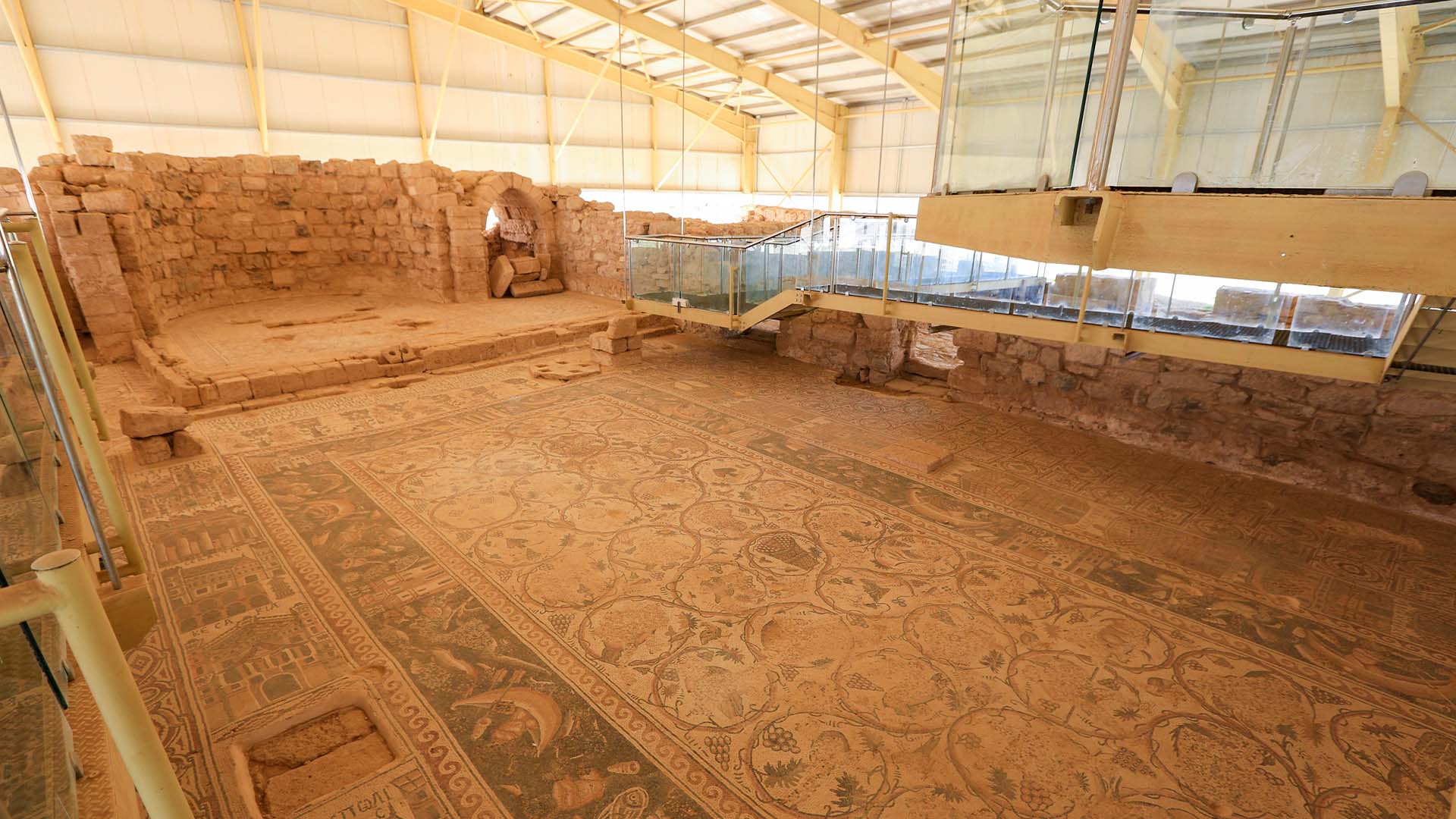
One of the most remarkable aspects of Um er-Rasas is its collection of 16 churches, each bearing its own unique characteristics. These churches represent the religious diversity and cultural influences of the region during different historical periods. Notably, some of the churches feature remarkably preserved mosaic floors that showcase exquisite craftsmanship. The Church of Saint Stephen stands out with its mosaic floor depicting various nearby towns, offering a glimpse into the urban landscape of the time. These churches provide valuable insights into early Christian communities and their architectural practices, showcasing the fusion of local traditions with broader cultural influences.
Among the intriguing features at Um er-Rasas are two square towers, believed to be the sole remaining vestiges of a well-known practice in the region – the lifestyle of stylites. Stylites were ascetic monks who chose to isolate themselves atop columns or towers as a form of devotion and spiritual contemplation. These towers serve as tangible links to the ascetic traditions and practices prevalent in the area during ancient times. They offer a unique glimpse into the spiritual and religious practices of the period, shedding light on the diverse range of beliefs and practices that coexisted in the region.
In addition to its architectural and religious significance, Um er-Rasas provides evidence of ancient agricultural cultivation in an arid environment. The surrounding landscape is dotted with remnants of ancient agricultural activities, showcasing the resourcefulness and ingenuity of the people who inhabited the area. Terraced fields, agricultural structures, and water management systems demonstrate the efforts made by ancient societies to adapt to their environment and sustain their livelihoods. These remnants offer insights into the agricultural practices and techniques employed by the inhabitants of Um er-Rasas, highlighting their ability to harness the limited resources available to them.
Exploring Um er-Rasas allows visitors to traverse the layers of history and witness the legacy of various civilizations that thrived in this region. While the unexcavated areas hold the promise of future discoveries, the existing findings make the site a compelling destination for history enthusiasts and archaeology aficionados. Um er-Rasas offers a unique opportunity to connect with the ancient world, gaining a deeper understanding of the cultural and historical dynamics that shaped the region.
Moreover, Um er-Rasas serves as a reminder of the importance of cultural preservation and heritage conservation. Efforts have been made to protect and restore the site, ensuring its longevity for future generations. The site’s inclusion on the UNESCO World Heritage List further emphasizes its global significance and the need to safeguard its historical and cultural value.
In conclusion, Um er-Rasas is a captivating archaeological site that unveils the riches of history and culture from the Roman, Byzantine, and Early Muslim periods. With its fortified camp, intricate churches, stylite towers, and evidence of ancient agriculture, Um er-Rasas provides a multifaceted window into the past. It stands as a testament to the richness of Jordan’s history and the diverse civilizations that left their imprint on its landscape. Exploring Um er-Rasas is a journey through time, revealing the legacies of ancient civilizations and fostering a deeper appreciation for the cultural tapestry of the region.





