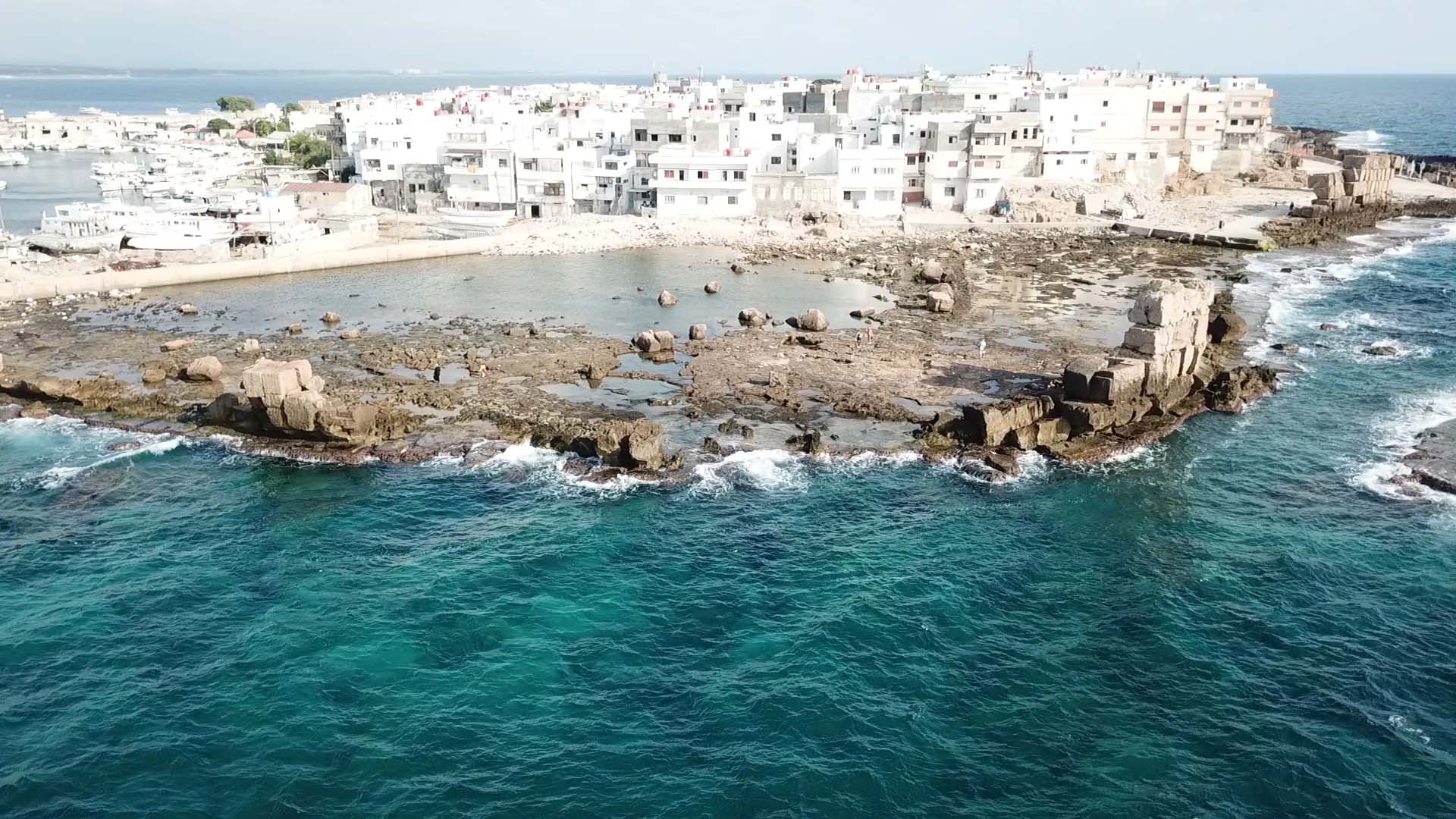

Arwad Island, located just off the coast of Tartous in western Syria, holds a unique position as the country’s only inhabited island and one of the eastern Mediterranean’s most historically significant maritime settlements. Lying only a few kilometers from the mainland, Arwad island has long benefited from its strategic offshore location, which shaped its role in trade, defense, and navigation across successive civilizations.
Tartous, the capital of Tartous Governorate, has historically functioned as a major port city connecting inland Syria with the Mediterranean world. Within this coastal setting, Arwad island naturally emerged as a maritime extension of the city, serving as a defensive outpost and commercial hub for centuries.
Arwad: A Strategic Island with a Deep Historical Legacy
Settlement on the Arwad island dates back to at least the 2nd millennium BCE, when it was established by the Phoenicians under the name Arados. It soon rose to prominence as one of the most powerful Phoenician city-states, renowned for its naval strength and commercial networks linking the Levant, Mesopotamia, Egypt, and the wider Mediterranean basin.
Over time, Arwad island passed under the control of successive empires, including the Persians, Greeks, Romans, Byzantines, and Crusaders. Each period contributed layers of architectural, urban, and cultural heritage that remain visible today. During the Crusader era, the settlement gained renewed military importance, becoming the last Crusader stronghold off the Syrian coast.
The Citadel and Architectural Heritage
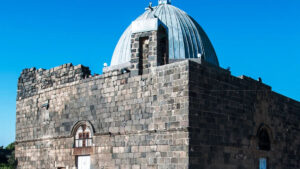
Dominating the island’s skyline is the historic citadel, a fortified complex that reflects centuries of strategic defense. Expanded and modified over multiple periods, the fortress incorporates elements such as the Ayyubid Tower and an Ottoman bath, underscoring the site’s layered historical narrative.
From its elevated position, the citadel offers panoramic views of the Mediterranean Sea and the mainland, illustrating the island’s historic function as a maritime watchpoint and defensive stronghold. Together with surrounding historic structures, it forms the core of the island’s cultural and architectural identity.
Urban Fabric and Living Archaeology
The settlement’s dense urban layout is the result of continuous habitation over thousands of years. Narrow alleys wind between traditional stone houses, many featuring inner courtyards adapted to island life. Architectural influences from Phoenician, Roman, Byzantine, and medieval periods can still be identified in construction techniques and spatial organization.
Scattered remains such as ancient tombs, column fragments, and medieval structures create a living archaeological landscape where daily life unfolds alongside tangible traces of the past.
Maritime Traditions and Local Life
Maritime culture remains central to the island’s identity. For generations, residents have relied on fishing, sailing, and boat building as primary livelihoods. These traditions continue today, reinforcing the strong relationship between the community and the sea.
Seafood cuisine, prepared using freshly caught fish, is a defining feature of local life and offers visitors an authentic cultural experience rooted in centuries-old practices.
Rehabilitation Works Underway
In recent years, the Directorate of Antiquities in Tartous has intensified efforts to rehabilitate Arwad island as part of a wider heritage preservation initiative. The initial phase focused on restoring key components of the citadel, including the Ayyubid Tower and the Ottoman bath, with careful attention to structural stability and historical authenticity.
Current works include upgrading the tourist pathway linking the harbor to the citadel, improving accessibility and visitor circulation. Additional sections of the fortress are also undergoing rehabilitation, supported by the Ministry of Tourism, reflecting a coordinated approach between cultural preservation and sustainable tourism development.
A comprehensive rehabilitation study has been prepared to guide future conservation efforts. Parallel coordination is underway to launch well-planned investment projects aimed at restoring historic buildings and access routes, while ensuring the protection of the site’s cultural and historical value.
Cultural Significance and Future Outlook
As Syria’s only inhabited island, this historic site represents a rare convergence of living community, maritime heritage, and layered history. Ongoing rehabilitation works not only safeguard its architectural legacy but also support its future as a cultural and tourism destination.
By balancing conservation with responsible development, these efforts ensure that Arwad island remains a vibrant symbol of Syria’s Mediterranean heritage—where history, culture, and everyday life continue to coexist in a unique and enduring setting.