The Jews of Syria: History, Heritage, and Revival
The Jewish presence in Syria is among the oldest in the Middle East, spanning thousands of years. From ancient settlements in Damascus and Aleppo to thriving communities during the Ottoman era and beyond, Jews played an integral role in Syria’s cultural, economic, and religious life. Today, although only a small number remain in the country, sustained efforts are underway to preserve this rich heritage and renew connections with an ancestral homeland deeply rooted in history.
A Legacy That Spans Millennia for Syrian Jews
Ancient Roots and Early Jewish Communities
Jewish life in Syria dates back more than 2,000 years, as confirmed by archaeological discoveries and historical records. Early places of worship—most notably the Dura-Europos Synagogue—demonstrate a long-established tradition of faith, learning, and communal life. These early Jewish communities laid the foundations for religious practice and cultural continuity that would endure for centuries.
Urban Flourishing and Cultural Life of Jews in Syria
Over time, Syrian Jewish communities experienced extended periods of stability and prosperity. In major cities such as Damascus and Aleppo, Jewish neighborhoods flourished with schools, charitable institutions, and vibrant marketplaces. Jews contributed actively to trade, craftsmanship, scholarship, and education, while developing a distinctive cultural identity that blended indigenous Mustaʿarabi traditions with Sephardic influences introduced after the expulsion from Spain in 1492.
Over the following decades, the Jewish population of Syria declined dramatically. Families resettled abroad, particularly in the United States and Latin America, carrying with them memories, traditions, and a shared identity shaped by generations of life in Syria.
Historic Return Trips and Renewed Engagement for Syrian Jews
A historic turning point came with the fall of the Bashar al-Assad regime in December 2024, opening a new chapter of reconnection. In 2025, Jewish Heritage in Syria (JHS) organized two landmark delegations to Damascus, led by Rabbi Yosef Hamra and Henry Hamra. These visits marked the first significant return of Syrian Jews in more than three decades.
The delegations focused on assessing historic religious sites, cemeteries, and former Jewish neighborhoods, while engaging with Syrian officials, civil society leaders, and local communities to advocate for preservation, restoration, and respectful stewardship of Jewish heritage.
A Small Community, a Global Legacy of Jews
Today, only a very small number of Jews—mostly elderly—remain in Syria, primarily in Damascus. Yet Syrian Jewish life continues to thrive in the diaspora, especially in communities in Brooklyn, Argentina, and Mexico. Through schools, cuisine, religious practice, and cultural organizations, Syrian Jews maintain a living connection to centuries of shared history and tradition.
Preserving the Past and Building the Future for Jews in Syria
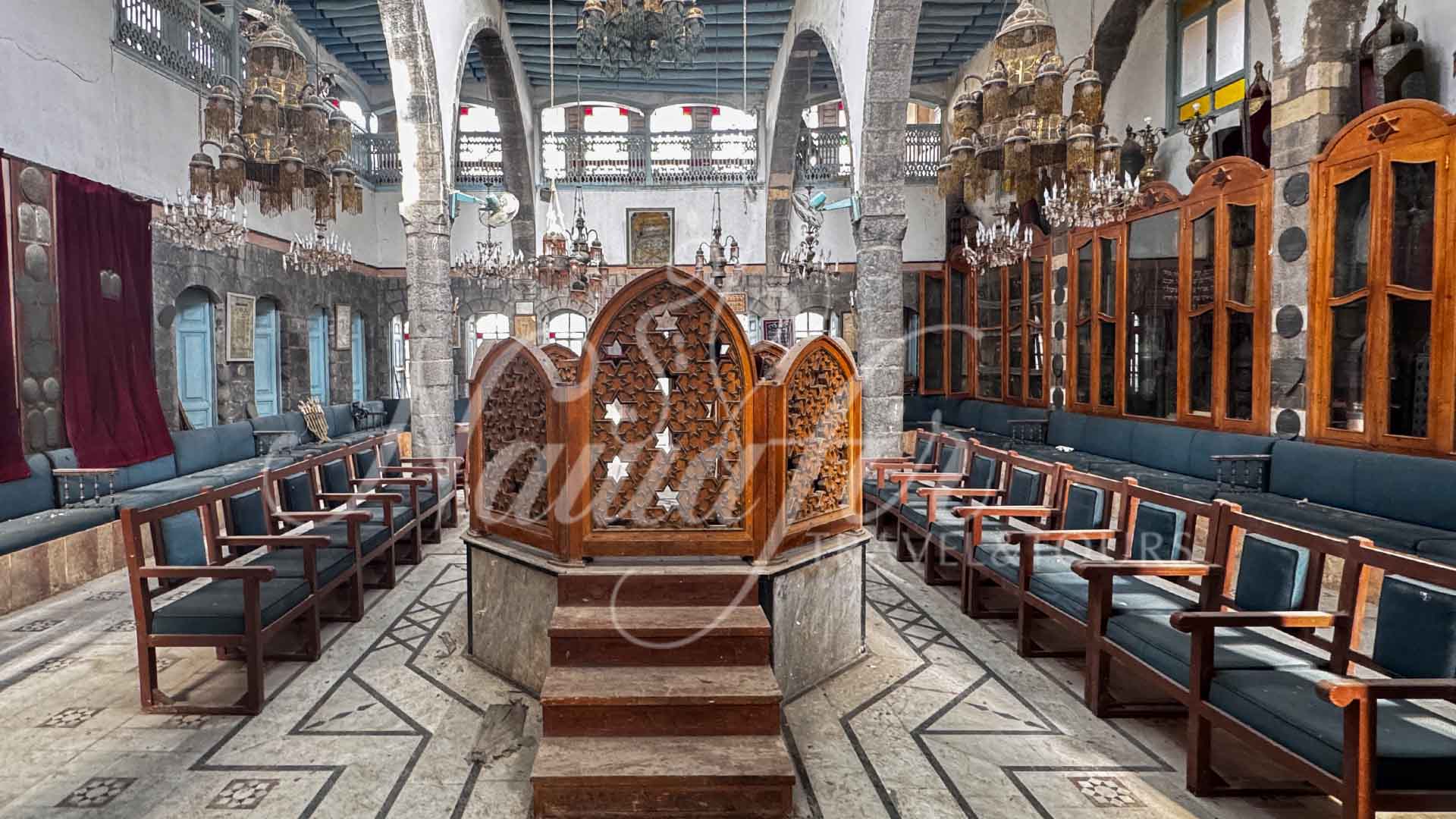
Historic landmarks such as the Jobar (Eliyahu Hanavi) Synagogue, the Elfrange (Faranj) Synagogue, and the Jewish Quarter of Damascus stand as enduring witnesses to centuries of coexistence. For Syrian Jews, these sites represent memory, continuity, and belonging.
Although many have suffered damage or neglect, ongoing preservation efforts aim to restore these places not merely as monuments, but as symbols of cultural pluralism and hope for Syria’s future.


Jewish Landmarks and Antiquities in Syria: A Testament to the Jews
Syria’s Jewish heritage is reflected in ancient ruins, community landmarks, and sacred spaces that once formed the backbone of religious and social life. Even in their current state—often abandoned or damaged—these sites remain powerful reminders of a once-thriving Jewish presence that shaped the country’s cultural mosaic.
Historic Jewish Sites in Damascus for Syrian Jews
- Jobar (Eliyahu Hanavi) Synagogue: One of the oldest and most revered Jewish sites in Syria, the Jobar Synagogue is traditionally associated with the prophet Elijah. Before the civil war, it served as a pilgrimage destination and housed ancient Torah scrolls. During the conflict, it suffered extensive damage and looting.
- Elfrange (Faranj / Al-Firin) Synagogue: Located in the Jewish Quarter of the Old City, this synagogue was founded by Sephardic Jews after 1492. It remained the last functioning synagogue in Damascus well into the 21st century and stands today as a symbol of resilience and continuity.
- Menarsha Synagogue: Also known as the Great Synagogue of Damascus, this 19th-century structure once stood at the center of communal life. A grenade attack in 1949 marked a tragic turning point, accelerating Jewish emigration. The building now stands abandoned.
- Smaller Houses of Worship for Jews: Numerous neighborhood prayer spaces once served local congregations throughout the Old City, reinforcing daily religious life and communal bonds. Most have long since fallen into disuse.
Jewish Sites Beyond Damascus: The Diaspora Connection
- Aleppo: Historically one of Syria’s most important Jewish centers, Aleppo was home to the Central (Bandara) Synagogue, which safeguarded the famed Aleppo Codex. Following the 1947 riots, most Jewish communal buildings were destroyed or abandoned.
- Hama and Qamishli: Hama maintained an active Jewish place of worship until the mid-20th century. In Qamishli, a smaller community gathered for prayer before eventually departing, marking the quiet disappearance of Jewish life from the region.
Jewish Quarters and Community Institutions Shaped by Jews
The Jewish Quarter of Damascus (Harat al-Yahud) once included homes, schools, and institutions such as Beit Farhi-Muallim, Beit Liniado, Beit Lisbona, and the Maimonides Jewish School. Together, these structures formed a vibrant communal landscape shaped by generations of Syrian Jews.
The Significance of Preservation for Jews and Syria
These landmarks are more than architectural remains. They embody centuries of faith, scholarship, and coexistence. Preserving them safeguards not only Jewish memory, but also Syria’s broader cultural heritage—ensuring that this shared history remains visible and meaningful for future generations.